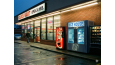

When a city council reviews the budget for park maintenance, "vandalism repair" often appears as a single line item. However, this line item hides a complex web of direct and indirect costs that drain municipal resources far beyond the price of a replacement fixture.
To understand the true cost of vandalism, we have to look past the broken mirror or the graffitied wall and examine the breakdown of civil order that these infractions represent. In communities across California—from the Bay Area to the Central Valley—we are seeing firsthand what happens when minor infractions are ignored.
1. The "Broken Windows" Effect: A Local Case Study
Criminologists have long cited the "Broken Windows Theory," which states that visible signs of disorder and neglect encourage further crime. If a window is broken and left unrepaired, passersby conclude that no one cares. Soon, more windows will be broken.
We see this play out in reality with homeless encampments and RV parking. In Gilroy and surrounding Santa Clara County areas, a familiar pattern emerges:
- Week 1: An RV parks along a remote sidewalk. It seems harmless.
- Month 1: Items begin to appear outside—bicycles, furniture, and appliances.
- Year 1: The sidewalk is impassable. The area has effectively been "privatized" by the occupant, and the public has lost access.
Because the initial infraction was ignored, the situation spiraled into a massive cleanup project.

Neglect accumulates: What starts as temporary parking becomes a permanent encampment.
2. The Hidden Environmental Cost
There is a stark hypocrisy in how environmental laws are enforced. In many counties, tax-paying citizens are strictly forbidden from swimming in local creeks because they are protected drinking water sources.
Yet, when encampments cluster along these same waterways without infrastructure, where does the waste go? Without access to sewer services, human waste and chemical runoff are frequently dumped directly into storm drains.
This is not just a nuisance; it is a biohazard. The cost to rehabilitate a contaminated waterway far exceeds the cost of maintaining a functioning public restroom or dump station.

3. The Erosion of Public Trust
The issue isn't that we cannot be sympathetic to those down on their luck. The issue is the arbitrary enforcement of the law. When a resident is fined for a minor code violation while an RV is allowed to dump waste into a storm drain for months, public trust erodes.
To maintain a functional society, laws must be applied equally. An RV parked for a night is a traveler; an RV parked for a year surrounded by debris is a failure of municipal management.
4. The Solution: Hardened Infrastructure & Accountability
Cities cannot simply wish this problem away. Pragmatic solutions, such as providing dump stations to prevent pollution, must be paired with strict enforcement.
This is where Vandal Stop enters the equation.
You cannot have a functioning public space if the facilities are constantly destroyed. If a restroom is vandalized, it gets locked. When it gets locked, the waste goes into the river. Facilities must be hardened against abuse:
- Secure Utilities: Locking Utility Enclosures prevent power theft and discourage loitering at pavilions.
- Indestructible Fixtures: 12-gauge stainless steel fixtures cannot be ripped off walls or used to hide contraband.
- Defensive Design: Eliminate hiding spots and ensure surfaces can withstand heavy graffiti removal solvents.

Public facilities must be hardened to remain open for legitimate use.
Invest in Order
We have compiled a detailed cost analysis showing how investing in hardened infrastructure reduces the long-term burden on taxpayers.