

It's called "Stain-Less," not "Stain-Never."
There is a common misconception in the facilities management world: "I bought stainless steel, so it shouldn't rust."
Yet, walk into a high-traffic public restroom near a beach or a locker room that gets deep-cleaned daily, and you will often see it: that tell-tale orange creep of corrosion eating away at your expensive fixtures. It looks dirty, it smells metallic, and it signals to the public that the facility is old and neglected.
Many people assume the culprit is biological—specifically, urine. While uric acid is corrosive, the true enemy of your stainless steel is likely sitting on your janitorial cart right now. This guide explains the chemistry of rust, the difference between steel grades, and the cleaning protocols that are silently destroying your investment.
Part 1: How Stainless Steel Actually Works
To understand why it breaks, you have to understand how it works. Stainless steel is an alloy containing iron (which wants to rust) and chromium. When exposed to oxygen, the chromium forms an invisible, microscopic shield called the Passive Layer (Chromium Oxide).
This layer is self-healing. If you scratch the steel, the chromium reacts with oxygen in the air and "heals" the scratch instantly. However, if this layer is chemically attacked or deprived of oxygen, the iron underneath is exposed, and rust begins.
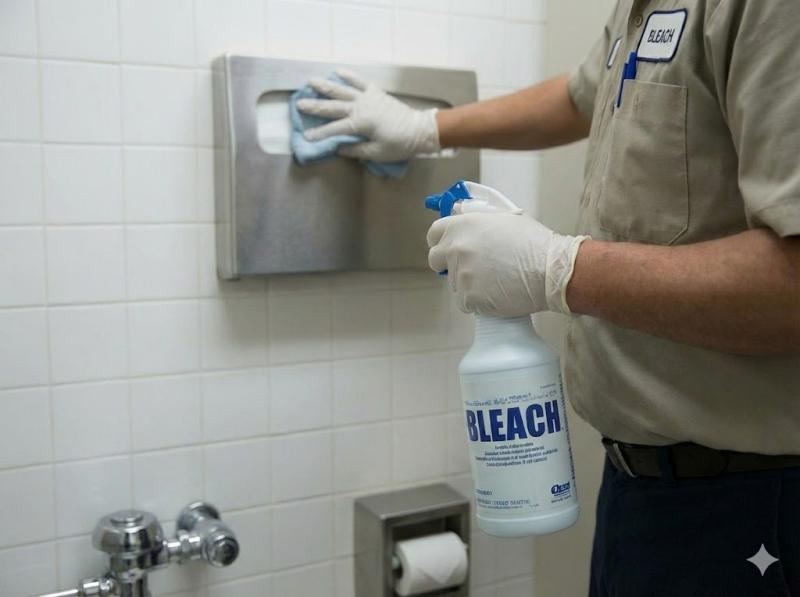
The wrong chemicals can strip the protective layer off your fixtures.
Part 2: The "Urine Myth" vs. The Real Culprit
A common theory is that the ammonia and uric acid in urine are the primary cause of restroom rust. While urine is corrosive and should not be left on surfaces, 304L stainless steel is generally resistant to it for short periods.
The real culprit is usually the cleaning product used to remove the urine. Most "heavy-duty" bathroom cleaners contain Chlorides (Bleach/Sodium Hypochlorite) or Hydrochloric Acid.
The Kryptonite: Bleach
Chlorides are the arch-enemy of stainless steel. They attack the passive layer, causing "pitting corrosion"—tiny holes that tunnel deep into the metal. Once pitting starts, it is incredibly difficult to stop. If your cleaning crew is spraying bleach on your partitions and dispensers, they are effectively chemically stripping the armor off your fixtures.
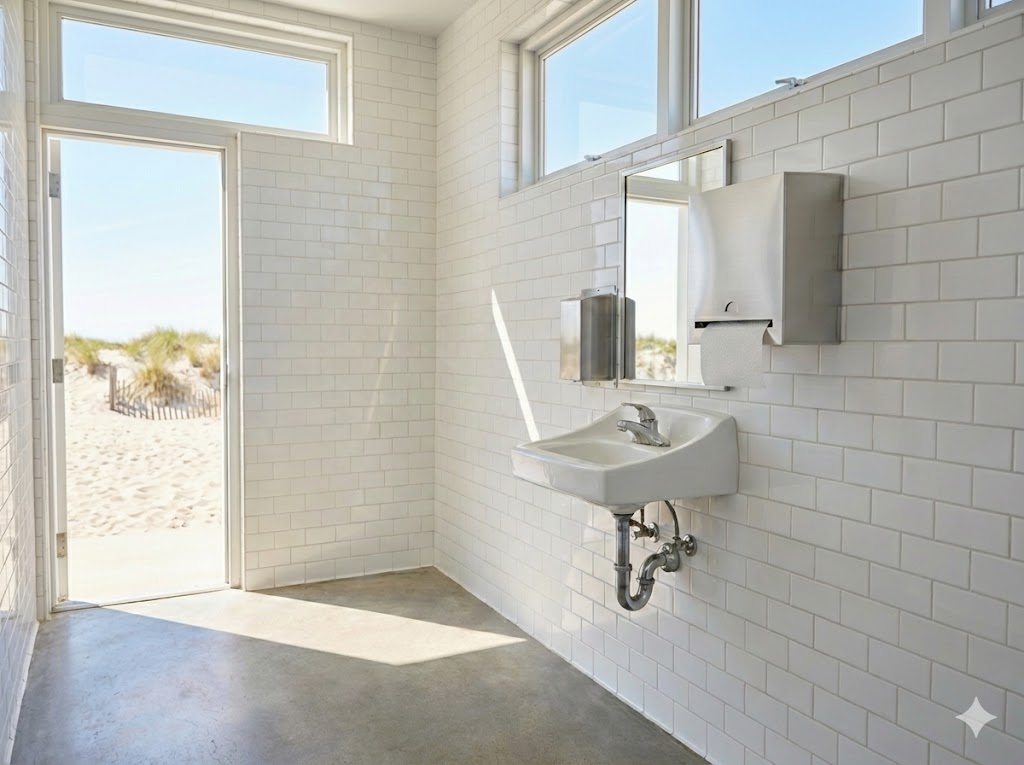
Salt air is a constant attack, but proper steel selection keeps it pristine.
Part 3: 304L vs. 316L (The Beach Factor)
Not all stainless steel is created equal. The two most common grades in our industry are 304 and 316.
Will 304L rust at the beach?
Yes. 304L is the standard for indoor, temperature-controlled environments (schools, offices, inland parks). However, it lacks Molybdenum. Without this element, the salt air (chlorides) from the ocean will eat through the passive layer of 304L steel in a matter of months, resulting in "Tea Staining" (brown surface rust).
Does 316L rust at all?
It is highly resistant, but not invincible. 316L contains Molybdenum, which specifically hardens the passive layer against salts and chlorides. It is often called "Marine Grade." However, if you leave a pile of wet, salty sand or a bleach-soaked rag on 316L steel, it will eventually corrode. It buys you time and durability, but it does not eliminate the need for maintenance.
Part 4: The Facility Manager’s Survival Kit
Your janitor likely already has what they need to clean stainless steel safely. The key is ensuring they use the right bottle from the cart.
⛔ UNSAFE (Avoid These)
- Bleach: Any cleaner with Sodium Hypochlorite.
- Toilet Bowl Cleaner: These often contain Hydrochloric Acid, which will pit stainless steel instantly.
- Steel Wool: Never use abrasive pads. They leave behind tiny iron particles that will rust, making it look like your fixture is failing.
- Vinegar-based Cleaners: While natural, acids can dull the finish over time.
✅ SAFE (Use These)
- Warm Water & Dish Soap: Simple Dawn dish soap is often the best cleaner for grime.
- Standard Window Cleaner: Blue, ammonia-based cleaners are generally safe for removing fingerprints (see note below).
- Oil-Based Stainless Cleaners: These clean and leave a protective layer that repels urine and water.
- Microfiber Cloths: Always wipe with the grain of the steel.
A Note on Windex
We often get asked: "Can I use Windex?"
The answer is Yes, BUT... make sure it is the standard "Blue" formula with Ammonia-D. Ammonia is alkaline and safe for stainless steel. However, avoid "Multi-Surface" versions that contain Vinegar (acid) or antibacterial agents that may leave a cloudy residue.
Recommended Products
If you need to restock your janitorial closet, these are the two essential products we recommend for maintaining Vandal Stop fixtures.
- For Daily Cleaning & Protection: Zep Plus Stainless Steel Polish & Cleaner
This is a commercial-grade foaming cleaner often used in hospitals and restaurants. It polishes as it cleans and leaves a water-repellent barrier that helps prevent fingerprints and soil buildup. - For Rust Removal (Restoration): Clean My Steel - Rust Remover Kit
If you already have rust, this is the specialized fix. It effectively removes surface rust and tea staining without damaging the grain of the steel. Essential for restoring older or coastal fixtures.
*As an Amazon Associate, Vandal Stop earns from qualifying purchases.
Conclusion: It’s About Chemistry, Not Quality
If your Vandal Stop fixture is rusting, it rarely means the metal is defective. It means the environment is attacking it. By switching to 316L for coastal locations and banning bleach from your janitorial closets, your stainless steel will live up to its name and last for decades.
End the Cycle of Repair
Don't settle for flimsy hardware. Specify 12-gauge stainless steel for your next project.
100% Free. Verify the gauge yourself.